TRANSLATE

Saturday, May 11, 2019

THE IDIOSINCRACY OF THE URUGUAYANS AND THE CUBANS GUAJIROS OF EASTER REGION.

Image result for gente esperando bus fotos

   THE IDIOSINCRACY OF THE URUGUAYANS AND THE CUBANS GUAJIROS OF EASTER REGION.

  There is only the meeting at a bus stop between several mature Uruguayans and Cubans from the East. Everything is very interesting. The spontaneity of the Uruguayan, his kindness and the almost visceral need to know or find out everything about the lives of others.

   Cubans from the mountainous east, timid, rather remain silent unless they are asked directly, where they are from, when they arrived, how long they live in Uruguay - even if they have spent 25 years as emigrants in the small country, and how they have gone in life, especially economically.

   I do not deny that there are Cubans who are interested in a Uruguayan to see if they can find work, housing or how to live from the story, as we say in Cuba. Almost all come from the western provinces and are more open, interested and when you least expect it they invite themselves to some house of a good-hearted Uruguayan.

  The other day at a bus stop there were many people, especially older Uruguayans and only two Cubans from the East, quiet and shy.

   -Well, the sister of my sister, may God preserve her in glory, had eight children and three husbands. And do you know how it ended? Alone and living with another sister with a miserable pension and always with the help of the BPS.

   -Well, that's nothing. My husband worked as a carpenter all his life and that's how he got old. Thank God he gave himself time to make his own coffin. And I was a widow, but still young. I joined a black man from Gana who was a good lover but in the end he ran away with all my savings and my few jewels, luckily I had a good pension to survive.

   A Lord intervenes in the conversation

  .-My youngest daughter is a professional dancer and she spends her time traveling the world. From time to time she sends me a postcard from Budapest, Milan or Moscow. She does know how to enjoy life. Now she wants to take me to Israel, to the holy places, but I feel very old to take a plane on a flight of about 25 hours. I would not resist it. I stay in Montevideo, which is the most beautiful place in the world.

   Another old woman intervened:

   -I lived in Tacuarembó in a beautiful farm. We cultivated vegetables and raised sheep and cows without any luxury or toys. Now my grandchildren, I'm like 17, they just want Play Station and the latest cell phone model. It's not fair. My mother corrected me with a flip-flop and made me do all kinds of seams with only threads, needles and good cloths. Now everything comes from China, cheap and of poor quality. These guys of today do not know about sacrifices.

   And the two eastern Cubans in silence, listening attentively and sympathetically to the mature.

   - And you, it is seen that they are not from here, I mean Uruguay?

  -No, we are Cubans.

  -Cubans! What happiness, with the beautiful beaches you have and sun all year round. In addition, it is a happy and peaceful town, no         demonstrations or strikes, as there are here in Uruguay.

  .-But we live in a dictatorship, without freedom of the press or of expression or market economy like you. There is hunger, bread is scarce, oil and beef have not tasted for years, "said the younger Cuban.

  -But what does it matter if there is hunger, we can spend days eating chard, beet or spinach pies. True friends. There is so much insecurity that we prefer communism with hunger but calm.

 - It is that there is something that you take for granted since you were born-said the other Cuban- the freedom. That is a desire of every country and that we do not have for 60 years...

 "SO MUCH!"

   They answered in unison.

  -Yes. And we are already fed up.

  -And why do not you fight  like in other countries? -they asked.

   -Because we are cowards and we fear to face the military and the government that do not pass the needs of the people.

  -Poor That's why they flee through the Brazilian jungle to our country that is open ... By the way, in Montevideo there are Cubans who have taken pensions where they live badly and form tremendous parties and do not look for work, -"said a woman.

.-These are not true Cubans who seek freedom in another country, but enjoyment and sniping agents of the Cuban government to give a false image of the Cuban emigrant. They have more Sandunga - the younger Cuban added again.

 -And you, what were you in Cuba and if you already got a job in Uruguay?

  -I'm an obstetrician and mine engineer. We already get work in a restaurant, waiters or cleaning bathrooms. We pay floor fees as you say.

  -Ayy ...! What a barbarity, an obstetrician and an engineer cleaning bathrooms ..

. -And you, calm with their precarious pensions and dreaming of exotic beaches and lots of sun. We prefer, for now, a democratic society like yours.

  The men and women fell silent. They did not know the free country, bad or good, in which they had to live. We Cubans must start from scratch but now with hope and yes with "a bright future" in another country and not with promise as always Fidel said durring years.

 A woman of about fifty years old with wide-eyed and bright approached and asked the two Cubans in a low voice:


   - And what does it mean that Cuban men have a great "Sandunga?


                         Orlando Vicente Álvarez

PARA MAMÁ GLORIA EN SU DIA. DE SU HIJO ORLANDO.


MAMÁ GLORIA, ESTA FLOR ES PARA TI. AUNQUE LA DISTANCIA NOS SEPARE, SIEMPRE ESTARÁS EN MI CORAZÓN Y EN MIS SUEÑOS. TE EXTRAÑO SIEMPRE.
QUE DIOS TE SIGA BENDICIENDO.

    TU HIJO  ORLANDO VICENTE

WHEN A MAN TRULY LOVES A WOMAN.


WHEN A MAN TRULY LOVES A WOMAN, THERE IS NO IMPOSSIBLE OBSTACLE TO REACH HER.

  They were studying at the University in the same study room. He was a thin young man who was ashamed of his appearance before his companions because of the thinness and height he possessed.But he was stung by that love bug. The intense love that makes you sigh, dream about your beloved and write poems that he only read.

  She was the smartest of the class but proud, silent and ignored the looks of the young man who did not miss any of her movements. Her gypsy beauty took his breath away, her copious long black hair running down her back like a waterfall fed by an endless torrent.

  One day he entered the store that the girl's father had near the study center. He confessed his love for his daughter, he could not do it anymore, he had to tell the father of his feelings.

  -Well- said the Galician as it was his origin- take these fine boards for the store's ceiling and paint them as if you were an experienced goldsmith. I will talk to my daughter and I will make her love you like nobody else in the world.

  In the University, his love for the girl was once lost to his companions and her friends told him:

  -Well, get away from her because she already loves another and thinks about marrying him. The best thing is to forget her-and they laughed sarcastically.

  He remembered that song by Diana Ross and the Supremes:

  "IS NOT NO MOUNTAIN HAIGHT ENOUFH"

 "Is not no mountain higher enough"
  "Nothing can`t keep me away from you"

  And he sing it whisper it softly again and again until the fatigue in his hours of lonely.

  He saw the girl with the boyfriend at a party. He carried a bottle of rum in the back pocket of his pants and from time to time he would take it out and have a drink.

  The young man remembered the promise he had made to his father. He went, took the planks and took them to his house. Alighed and  sow and with a fine chisel engraved the finest arabesques of love that came out of his soul. All without knowing how that fine art came from his hands. 

  He brought the tables to the father of the girl and he was amazed by the work.

  -It was not you. Not. Someone should have helped you.

   The young man was silent. Only love had inspired him.

   Then he found out that the girl had a pneumonia that did not respond to any medication. Finally the doctors handed her to her parents in a coma so that she would die when God called her to the final rest. The boyfriend easily left her for others girl, he did not want to take care of the sick, it was not so much his love.

  Our young man asked for permission from the parents and every afternoon he sat by the sick woman's bed reading her love poems that he had written so eagerly over the months, even though the girl did not listen to them in her comatose state.

  Three months after the coma the girl opened her eyes, looked at the young man, recognized him and told him that in her dreams she remembered each one of his love poems. It was the only thing that connected her with the conscious world. 

  The young man was very happy and felt glad, he thanked God.

  When her parents came in, happiness was great when they saw her come back to herself, between tears and sobs.

  The girl looked at the young man next to her and said:

  -Now I know what true love is that has no borders or high mountains to climb to meet with the beloved.

   And so, it was the great love that they professed to each other. They got married, they had children and they were together until the end. One did not survive the other, so much love they had that they did not imagine living as old widowers in the solitude of their memories.

  "" Baby if you need call me no matter where you are,
    No matter how far;
    Just call my name;
     I'll be there in a hurry;
    You do not have to worry,
    'Cause baby there is not mountain high enough,Is not no valley low enough,Is not no river wide enough,

   To keep me from getting to you babe.

    I'll be there when you want me,

    Some way, some how.

    'Cause baby there is not mountain high enough,

     Is not no valley low enough,

    Is not no river wide enough

   To keep me from getting to you babe.

   My love is alive

  Way down in my heart

   Although we are thousands apart "

   "Honey, if you need me, call me no matter where you are.

   It does not matter how far.

   I only gave my name.

    I'll be there in a hurry.

   You do not have to worry because I do not have a mountain high enough

   .There is no valley low enough.

    There is not a wide enough river.

   To avoid touching you, baby.

   I will be there when you want me.Somehow,

   .Because baby there is not a mountain high enough.

  There is no valley low enough.

   There's not a river wide enough to keep it from touching you, baby.

  My love is alive.I walk down in my heart.

   Although we are miles away "

                              Orlando Vicente Álvarez

LA TROVA. CUBA: GUILLERMO TELL, THE ARROW, THE SON AND THE APPLE


Image result for CARLOS varela imagen

CUBA: GUILLERMO TELL, THE ARROW, THE SON AND THE APPLE.
BY ORLANDO VICENTE ALVAREZ

    In homage to Carlos Varela, Cuban singer-songwriter.

   We are already tired of trying the strength and courage of Castro pointing his crossbow at an apple on his son's head.Castro used the people, the soldiers, to proclaim the firmness of his crossbow by shooting the apple on the son's head. Without the human fear that the pulse failed him, to kill the son in a sacrifice before his enemies to demonstrate the firmness of the Revolution before the supposed enemy.

  I remember Abraham's attempted sacrifice of his first-born Isaac, for demonstrating to a God who did not even know by name or had seen him, his unwavering faith in the Most High. I can not imagine the wide-eyed eyes of the son to see his beloved trip bring a sharp knife to his neck. Terror and disbelief is what he must have felt.

  Thus Castro pointed his crossbow at the apple of his people who believed in him. It was the revolutionary generation that blindly trusted the leader who wielded the weapon and were willing to sacrifice. Fidel would never take the place of the son. He was a manipulator and a coward. Death and sacrifice for others. Thus, he sacrificed soldiers who went to Africa and other Latin American countries. The apple, on top of other heads, not on his.

  Now another generation that did not know the struggles of yesteryear against the dictator Batista acquired another consciousness, tired of carrying apples on the head while the same crossbowmen, who did not give the relief to new ones, revealed themselves, tired of being examples for a Tyrant

  Follow the propaganda around the world.

   And a new exile began. The best Cuban minds to unknown lands, no matter where, the question was that they were tired of the game of the chief crossbowman. And this new generation, the one that stayed in Cuba, had the time to grab the crossbow and place apples in the old communist generation.But it would not be easy. Dictators always like the apple in another head, even if they are their children and they died in the cast.

  Difficult to understand the song of Varela. But between the lines it said a great truth that the sensible but silent people understood by instinct.

  He had seen Fidel Castro bless Silvio Rodríguez and Pablo Milanes at the Havana Airport when he saw on foreign TV mobilize crowds at his concerts in Chile, Argentina and Uruguay. The Chief Maximus saw the political importance of the new troba as a weapon of influence in the region, not only guerrillas and infiltrators, but also militant music. And he blessed them both, placing his hands on their head.

  Silvio was already almost bald, so Castro's baptism came faster to his brain. Pablo Milanés had curly hair in an American black spell drum so the magical rays of the commander did not penetrate him so deeply.After that Silvio wrote "Urgent song for Nicaragua". He had become an official troubadour. Then, apparently disenchanted, he wrote his best songs, true musicalized poems of a lyricism that would envy the best poets.

   Pablo was not politicized, he made some lukewarm critiques of the system and continued his tours of America. It is said that Silvio was discovered in "Papers of Panamá" very juicy bank accounts. He was awarded for being an official singer, of the "untouchables"

  But Carlos Varela jumped to fame and his songs, with the smell of criticism, did not pass through the radio. "Take into account this the other singer-songwriters who dare to disagree with the regime"

   Thank you, Carlos Varela, you were one of the first to sing in metaphor what the new generations longed for and felt.

  GUILLERMO TELL, CARLOS VARELA

  "Guillermo Tell no
   He understood his son
   That one day he got bored
   From the apple on the head ""
   He ran and the father cursed him.
  How then I was going to prove his skill "

   "Guillermo Tell, your son grew up
    Want to shoot the arrow
   It's his turn to try
  Your value using your crossbow "

   "Guillermo Tell not
     He understood the commitment
    Well, who was going to risk
    To the shot of that arrow
    And he got scared when he said
   The little one, now
   It's the father's turn
  The apple on the head "

  "Guillermo Tell, your son grew up.
  Want to shoot the arrow
  It's his turn to prove his worth
  Using your crossbow "
"William Tell not
 He liked the idea
 And he refused to get  the apple on the head "
"Saying not

 It was that he did not believe
But what would happen if  the arrow goes wrong "

"Guillermo Tell, your son grew up
Want to shoot the arrow
It's his turn to prove his worth
Using your crossbow "

"Guillermo Tell did not understand
Your son who was bored one day
Of the AppleIn the head "

Tranducter by Orlando Vicente Álvarez


DR ORLANDO VICENTE LVAREZ
CUBAN URYUGUAYAN
GENIUS

Friday, May 10, 2019

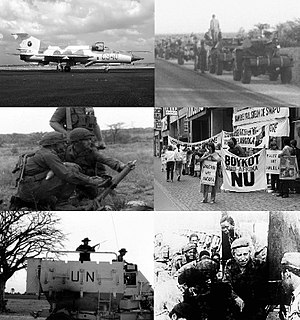
CUBA: LIVE OR DEAD PHANTOMS IN ÁFRICA ARE WANDERING ACCUSING THE CASTRO.

CUBA: LIVE OR DEAD PHANTOMS IN AFRICA WANDER ACCUSING THE CASTROS.

Image result for guerras cubanas áfrica imagenes

CUBA:LIVE OR DEAD PHANTOMS IN AFRICA WANDER ACCUSING THE CASTRO.
  When I was in the third year of medical school, we received "military training" on Tuesdays of each week. One morning, before a dark military professor with a typical Santiago accent, he told us about the bombers and the artillery preparation when the Cuban intelligence suspected that an enemy soldier of the Unita was taking refuge in a village.

  I was the only one to raise my voice to what I suspected:

   _ And if there were children, women and old people in the Angolan village, what did the Cuban troops do then?

   A sepulchral silence spread through my classmates, none dared to speak.

  -Well, it was a war without quarter. Everyone was exterminated in the village, it did not matter if they were children, women or the elderly. This is a war. You can not have compassion with anyone.

  I was thoughtful. As a trainee we were taught to save vulnerable lives by not murdering them. My companions were silent. To such a degree was indoctrination ....

   What was all this suffering and devastation for? A quarter of a century after the end of the Cuban intervention in Angola, the Angolans still suffer great political repression and economic marginalization. The leaders of the MPLA, underpinned by Cuban military intervention, remain in power, commanding a state monopoly capitalism.

   Today, they are recognized among the most corrupt and wealthy rulers in Africa, while the majority of the 29 million Angolans live in poverty.

  The veterans of these African wars, with physical or emotional traumas, some were treated in Cuban secret hospitals for ignorance of the population in general.

  My brother-in-law, a virile and handsome young man, came from Angola with convulsive nervous crises that attacked him when he remembered the cruel fighting in Angola. He made terrible stories of aerial bombardment and artillery attacks. Then he was attacked by the convulsive crises reactivated by the memory. After a few years, they disappeared and they gave him an administrative position in a large company although he only has reached sith grade of education.

  .I have a friend who, in the war in Ethiopia, when a retreated  Russian cannon that launched projectiles, it hit the front left zone. and part of the eye. He was in a coma for a week until he was brought to Cuba. In a special hospital they reconstructed the wound and placed a piece of metal, I do not know if aluminum, in the affected area. Since then, cerebrospinal fluid was leaking through the nose and treated with broad spectrum antimicrobials.

  When I went to Cuba recently, after 17 years forbidden my entry to my own country, I went to visit him. He looked like he was wearing a mask from a horror movie. The left side of the face was   crushed and he had lost the vision of the eye on that side. He had become an alcoholic and was lying unceasingly. Poor victim that I witnessed first-hand the war in Ethiopia. When I asked him about Megistus, the Ethiopian leader that Cuba helped, he knew nothing about him. I did not mean to tell him that that the leader for what he had fought in vain , left a hungry town, took refuge in Zimbabwe in a mansion with all the fortune he had swallowed in his own village.

  And when Cuba mounted a national show to bury the fallen soldiers in the wars in Africa. I said that if I were the mother of one of the deceased I would randomly give my fist as a sign of respect for those almost beardless soldiers who took Africa to die and not a flag and a sign of applause for the "fallen heroes". Cute and hypocritical all that parade, characteristic of Castroism that makes everything victory or shit.
  This is how the living ghosts -who live in subhuman conditions, plus the ghosts of the deceased- wander around the island, who will not rest until the real enemy-the Castro government-falls and true freedom reigns in the Cuban people.

  The military interventions of Cuba in the rest of the world began after 1959 and the triumph of the Cuban Revolution, which meant its alignment with one of the two superpowers of the time, the Union of Soviet Socialist Republics (USSR), which meant a change in Cuban foreign policy.All these interventions had as common elements to be directed towards Third World countries, helping the implantation or support of governments related to Marxism-Leninism, justified by the Cuban government under the argument that it was "proletarian internationalism" or realized anticolonialism in support of the peoples that according to the Cuban government wanted to have a socialist state, that the Cuban invasions were functional to the geopolitical interests of the Soviet Union and in opposition to the foreign policy of the United States of America, and were carried out with technical support Soviet and the Democratic Republic The military interventions of Cuba in the rest of the world began after 1959 and the triumph of the Cuban Revolution, which meant its alignment with one of the two superpowers of the time, the Union of Soviet Socialist Republics (USSR), which meant a change in Cuban foreign policy.All these interventions had as common elements to be directed towards Third World countries, helping the implantation or support of governments related to Marxism-Leninism, justified by the Cuban government under the argument that it was "proletarian internationalism" or realized anticolonialism in support of the peoples that according to the Cuban government wanted to have a socialist state, that the Cuban invasions were functional to the geopolitical interests of the Soviet Union and in opposition to the foreign policy of the United States of America, and were carried out with technical support Soviet Union and the Democratic Republic of Germany.

   In the official terminology allowed by the Cuban government, the military interventions carried out by the socialist Cuba can be called "internationalist missions".The period in which the interventions are given has sometimes been called by its critics the era of "Cuban imperialism" or "Cuban military imperialism," while in Cuban official terminology the term "Cuban military internationalism" can also be found, 3 it would include both direct military interventions (wars, sending of military forces) and indirect interventions (logistical support of governments or guerrilla movements, activity of the espionage service, incitement to coups).

  The Cuban socialist regime, in plans to expand its influence, gave preference to direct military intervention in sub-Saharan Africa, unlike in Latin America, where it gave preference to the sponsorship of local subversive organizations. Particularly noteworthy is the Cuban military presence in Africa, with more than 36,000 troops in 1985, especially in Angola (23,000) and Ethiopia (12,000). Within Cuba, the regime justified the sending of Cubans to the distant African wars under the discourse that Cuba is a "Latin African" nation.As the Socialist Bloc collapsed at the end of the 1980s, Cuban troops and operations abroad were reduced, and with the collapse of the Soviet Union and the beginning of the Special Period in Cuba in the early 1990s, they ceased. Cuban military interventions abroad.This list only includes the sending of Cuban military personnel as regular forces recognized as belligerents among the States.

   Military invasions are added separately for coup purposes.1963: War of the Sands in Algeria, is the first intervention of the Cuban armed forces in foreign territory.1964-1965: During the Crisis of the Congo. In the Democratic Republic of the Congo, regular Cuban troops infiltrated from Tanzania participated in war actions without much success.1973-1974: During the Yom Kippur War, the Syrian Arab Republic requested military aid to Cuba and the Cuban government sent a brigade of tanks that participated in combats.1975-1991: Regular Cuban forces entered Angola, in the mission called Operation Carlota, to support the communist government and participated in the Angolan Civil War and the South African Frontier War.1977-1988: During the Civil War of Ethiopia and the Ogden War, Cuban troops entered Ethiopia to support the socialist government and fight the Somali national deliberation movement of the Ogaden.1979-1990:

   In the Sandinista Revolution in Nicaragua, the Cuban State sent military personnel who took control of the Nicaraguan military security and intelligence services.1959: Failed expedition to Panama in order to start a revolutionary movement in the country. They were arrested after a skirmish with the Panamanian National Guard.1959: Failed expedition to the Dominican Republic to overthrow the dictatorship of Rafael Trujillo Molina, in alliance with the Dominican exile.1963 and 1967: Failed expeditions of the Cuban military to take power in Venezuela, installing a friendly government with Cuba and ensuring the supply of oil to the island. The Venezuelan government repels the invasion by destroying the Cuban artillery installed on Venezuelan islands.The pretext of this military interference in Ethiopia was that the Somali military intervention was a very dangerous threat against the invaded country. When in reality it was nothing new and only affected the region in dispute, the OgadenThe big difference between the two countries that help the Ethiopians is that the USSR puts resources, means and Cuba - as always - puts men.The government that Fidel decided to defend was dominated by a man whose mandate brought to his people massive famines that provoked the m   The military interventions of Cuba in the rest of the world began after 1959 and the triumph of the Cuban Revolution, which meant its alignment with one of the two superpowers of the time, the Union of Soviet Socialist Republics (USSR), which meant a change in Cuban foreign policy.

  All these interventions had as common elements to be directed towards Third World countries, helping the implantation or support of governments related to Marxism-Leninism, justified by the Cuban government under the argument that it was "proletarian internationalism" or realized anticolonialism in support of the peoples that according to the Cuban government wanted to have a socialist state, that the Cuban invasions were functional to the geopolitical interests of the Soviet Union and in opposition to the foreign policy of the United States of America, and were carried out with technical support Soviet Union and the Democratic Republic of Germany. In the official terminology allowed by the Cuban government, the military interventions carried out by the socialist Cuba can be called "internationalist missions".

  The period in which the interventions are given has sometimes been called by its critics the era of "Cuban imperialism" or "Cuban military imperialism," while in Cuban official terminology the term "Cuban military internationalism" can also be found, 3 it would include both direct military interventions (wars, sending of military forces) and indirect interventions (logistical support of governments or guerrilla movements, activity of the espionage service, incitement to coups).

  The Cuban socialist regime, in plans to expand its influence, gave preference to direct military intervention in sub-Saharan Africa, unlike in Latin America, where it gave preference to the sponsorship of local subversive organizations. Particularly noteworthy is the Cuban military presence in Africa, with more than 36,000 troops in 1985, especially in Angola (23,000) and Ethiopia (12,000).

  Within Cuba, the regime justified the sending of Cubans to the distant African wars under the discourse that Cuba is a "Latin African" nation.As the Socialist Bloc collapsed at the end of the 1980s, Cuban troops and operations abroad were reduced, and with the collapse of the Soviet Union and the beginning of the Special Period in Cuba in the early 1990s, they ceased. Cuban military interventions abroad.This list only includes the sending of Cuban military personnel as regular forces recognized as belligerents among the States. Military invasions are added separately for coup purposes.1963: War of the Sands in Algeria, is the first intervention of the Cuban armed forces in foreign territory.1964-1965: During the Crisis of the Congo. In the Democratic Republic of the Congo, regular Cuban troops infiltrated from Tanzania participated in war actions without much success.1973-1974: During the Yom Kippur War, the Syrian Arab Republic requested military aid to Cuba and the Cuban government sent a brigade of tanks that participated in combats.1975-1991:

   Regular Cuban forces entered Angola, in the mission called Operation Carlota, to support the communist government and participated in the Angolan Civil War and the South African Frontier War.1977-1988: During the Civil War of Ethiopia and the Ogden War, Cuban troops entered Ethiopia to support the socialist government and fight the Somali national deliberation movement of the Ogaden.1979-1990:

  In the Sandinista Revolution in Nicaragua, the Cuban State sent military personnel who took control of the Nicaraguan military security and intelligence services.1959: Failed expedition to Panama in order to start a revolutionary movement in the country. They were arrested after a skirmish with the Panamanian National Guard.1959: Failed expedition to the Dominican Republic to overthrow the dictatorship of Rafael Trujillo Molina, in alliance with the Dominican exile.1963 and 1967: Failed expeditions of the Cuban military to take power in Venezuela, installing a friendly government with Cuba and ensuring the supply of oil to the island. The Venezuelan government repels the invasion by destroying the Cuban artillery installed on Venezuelan islands.

  The pretext of this military interference in Ethiopia was that the Somali military intervention was a very dangerous threat against the invaded country. When in reality it was nothing new and only affected the region in dispute, the OgadenThe big difference between the two countries that help the Ethiopians is that the USSR puts resources, means and Cuba - as always - puts men.The government that Fidel decided to defend was dominated by a man whose mandate brought to his people massive famines that provoked the mThe government that Fidel decided to defend was dominated by a man whose mandate brought to his people massive famines that caused the death of more than a million Ethiopians, unstoppable repression against their opponents and uprisings against the regime.

  We spill Cuban blood for defending a man who, fleeing his country, stole more than 400 million dollars from his hungry people.We help to keep in power a person who in 2006, was tried in his country - in absence - for the charge of genocide and in 2008 was sentenced to death.The former Ethiopian president leaves a country in bankruptcy, plagued by drought and hunger that threatens the death by starvation to seven million people. The effects of Mengistu's flight are not going to be immediate, but observers agree that it can be positive for the timid opening announced last year by the then president, with the decision to move towards a market economy.

  Currently Mengistu resides in Harare, the capital of Zimbabwe in his millionaire mansion.

  On December 6, 1989, in the so-called Operation Tribute, remains of the fallen were brought to Cuba, because there was a moment during the war that the transfer of corpses to the island was prohibited.The Cuban intervention in Angola took place between 1975-1991 and some 350,000 men left the island in military service to the country of southern Africa.

  The extinct Soviet Union offered the armament and subsidized much of the logistics of the war.The author Carlos E. Pedre Pentón, who participated as a soldier in the conflagration, speaks in his book The unnecessary war of 10,000 deceasedCuban troops left Angola at the end of the 80s, leaving a country presided by José Eduardo Dos Santos, who was 38 years in power after succeeding Agostinho NetoIn 1975, Fidel Castro initiated "Operation Carlota," which, according to official figures from Havana, would involve, for 16 years (until 1991), 377,033 soldiers and more than 50,000 Cuban civilian aid workers. Officially, it was explained that the self-proclaimed Angolan president Agosthino Neto, a historical communist and ally of the Soviet Union (USSR), had requested military aid from Cuba. However, the reality was different; A former senior Cuban intelligence official confirms that the USSR - which kept Cuba with billion dollar annual subsidies - asked Castro to send the Cuban military force, promising to pay for all the war material.Having Portugal begun the process of independence of its African colonies, the USSR sought to consolidate Neto in power to move Angola into the Soviet orbit, but it did not suit that it appeared as the invading force in support of Neto. In the scenario of the cold war, the USSR supported the MPLA (Popular Movement for the Liberation of Angola) of Neto and the SWAPO (Popular Organization of South-West Africa), which fought for the independence of Namibia, while the United States, together with South Africa, they supported UNITA (National Union for the Total Independence of Angola) and the FNLA (National Front for the Liberation of Angola).

  Cuba did not act by pure revolutionary solidarity, since it received payment for its services, estimated between US $ 300 and US $ 600 million annually (which would mean $ 4.8 to $ 9.6 billion in 16 years of contention). The author of a recent book on the war in Angola, former Cuban soldier in Angola, engineer Carlos Pedre, obtained a confidential testimony from a former officer of the FAR (Revolutionary Armed Forces of Cuba) that Angola paid $ 2,000 per month per soldier Cuban. Cuba also developed millionaire businesses, managed by high officials of the FAR, with the systematic looting of Angola's ivory, diamonds and wood; They even diverted finished equipment to Havana for various factories in Angola.

  It is an open secret that the Cuban military also "stole everything they could" -including vehicles, and home furniture; It is also alleged that they were trafficking drugs. The commander Ochoa, hero in both wars and who did so much for the triumph was shot by the castro so that they did not get dirty in the drug and diamond traffic. Of course, the president and prime minister of the FAR sent from Cuba, do not risk their pretty skin in the fighting, without knowing the hardships that even officers went through in the shortages of a war where troops and officers earned a measly wage and had to go to the black market to exchange food for other products.Despite the high income that Cuba received for its "assistance" to Angola, it did not compensate the majority of the soldiers it sent there; these were mostly very young recruits serving compulsory military service who only received the 7 Cuban pesos a month payable to conscripts in Cuba. To the officers about degree of   The "resistance" to Angola did not compensate the majority of the soldiers it sent there; these were mostly very young recruits serving compulsory military service who only received the 7 Cuban pesos a month payable to conscripts in Cuba. Officials on the rank of captain were paid only 600 kwanza, while senior advisers and officers received 900 to 1,000 (one kwanza was approximately one US dollar).Likewise, ordinary soldiers did not have vacations (the officers did) and they had to serve for three years without returning to Cuba.

  To top it all, according to the writer Jorge Olivera Castillo, an Angolan veteran, on returning to Cuba, "we were only able to buy one or two changes of clothes, some perfumes of poor quality and some personal hygiene with the paltry amount of money they gave us.

  After that humiliation, the winds of Olympic oblivion arrived. "Likewise, Cuba was transferring troops, sick and wounded in its merchant ships with poor transfer conditions. Since I am violating international rules, they were hiding them in the cellars. The trips could last from 18 to 21 days, causing more human suffering and probably the death of many sick and injured.Since the beginning of the war, the corpses of the dead were not allowed to be moved to Cuba. It was not until December 6, 1989, when the end of the conflict was negotiated, that they were supposedly transferred to the island in the so-called "Operation Tribute," performing burials with honors in each of the 169 municipalities in specially prepared cemeteries. .However, veterans of the war report that many of the dead were buried where they had fallen and doubt that many were repatriated.

  A former Cuban pilot who served in Angola in 1983 reports that the Cuban dead were unceremoniously buried, directly on the ground and practically without clothing (the boots were reused) in a special section of the Alto Las Cruces cemetery in Miramar, Luanda; When it was full, they started using another cemetery to open another cemetery at the end of an airport runway. He was familiar with the forensic work prior to the repatriations of 1989, but insists that the repatriated remains were not only of Cubans killed in Angola, but also "internationalists" who died in Ethiopia, Nicaragua, Algeria and other African countries.The foreign conflict left enormous income to the Castro regime, but it cost the Cuban people a lot. Thousands returned from the war mutilated, with psychological traumas and some even mad. What's worse, the veterans of the war were treated ungratefully. Many today live in misery and, according to Olivera Castillo, "... many of the beggars and the crazy people who roam the streets of Cuba are veterans of that war."In addition, the Cuban population was deprived of health services due to the large number of professionals sent to Angola.

  In short, as Cuban freelance journalist Tania Diaz Castro points out: "On the so-called" epic of Angola, "we could ask ourselves if it was worthwhile for a small impoverished island, located 14,000 kilometers from Angola, to be left without those children in mostly young, many of whom struggled without knowing why they did it.For its part, Angola paid a gigantic cost for the conflict: between 500,000 and one million dead, 3.5 million internally displaced, hundreds of thousands fleeing to neighboring countries such as Zaire and Zambia, rural infrastructure and the economy practically destroyed, most of them of the population in misery, almost two million facing a famine and the abuse of human rights established as a norm.

  The scenario of horror included war crimes by Cuba such as deliberate attacks on defenseless civilian populations and even the use of chemical weapons against UNITA troops and civilians who supported them.And now, there are still naïve people of the Latin American left who support the Castro interference in other countries without any interest. Only to implement Soviet socialism and expand the socialism to the Cuban world. When the Soviet Union imploded, the subsidies in money and arms to Cuba ended.Now he replaces them with cheap human flesh: the internationalist doctors whose families are proud in Cuba for what they are going to bring him in sham and the meager dollars they are paid. To the point, that the Cuban family, opts for an internationalist doctor or a pretty mulatto jinetera to improve their lives of hunger and lack of housing.

WHERE DO THE TYRANTS GO WHEN THEY DIE?

Image result for DEMONIO

WHERE DO THE TYRANTS GO WHEN THEY DIE?

  Pope Francis recently said "The eternal condemnation is choosing to distance oneself from God. He exhorts not to dialogue with the devil, seducer and trickster, "he said to the devil as someone who ruins lives and with him there is no need to dialogue. He called it the "dragon, the ancient serpent." And he will be judged in the final judgment - he indicated - so that he does not "seduce the nations more, because he is the seducer".The devil "is the father of lies, he creates lies, he is a trickster. It makes you believe that if you eat this apple you will be like God.

   He sells it to you like that and you buy it and in the end he deceives you, it ruins your life. ""Hell they do not send you: you go, because you choose to be there. Hell is getting away from God because I do not want the love of God. This is hell. The devil is in hell because he has loved him: he never had a relationship with God."

  The eighteenth chant of Dante Alighieri's Inferno is located in the eighth circle, where ruffians and seducers and sycophants are punished respectively.With this song the second half of the infernal song begins. Interestingly, Hell is divided into two halves of 17 years, in which each appear 13 categories of convicts: two numbers particularly sinister and linked to superstitions. In this second part are treated fraudulent (which is subdivided into deceivers and traitors) is those who used intelligence and reason for evil purposes. And they offer harangues to the people with their easy talk, with promises and hopes for a "bright future"

  In a lake of fiery blood is Fidel Castro in the first place, with his head out but crushed by the centaurs with spikes to sink it again. Fidel is condemned to constantly lay eggs of ostriches for his bleeding backside. Thousands of carnivorous and hungry jutias devour his hypertrophied tongue, while hundreds of crocodiles cut off his limbs with a lot of pain that spontaneously grows back.

  Fidel Castro had the premonition of eternal punishment in life and that is why he wanted his mausoleum to have the shape of a giant ostrich egg, thinking that there he would be resting eternally as the God who believed. But the devil had other plans for him to deceive the whole world with his follies disguised as justice.

  Pope Francis advises us not to be seduced by the speeches, the debate where we only talk about a reality - that of the ruling regime - as if it were a closed sect. It is the devil himself before us embodied in a leader who drags crowds. Let us not be deceived: the devil exists.This is what awaits his brother Raúl Castro, the lake of boiling blood, and the other dictators such as Maduro and Daniel Ortega who have left God and awaits a Dantesque inferno. But they think they are eternal, as has always happened to despots throughout history.

  The Council of State of Cuba wants to make a contract with the devil-they have already established the respective embassies-to import the thousands of eggs of ostriches that the deceased commander puts as an eternal machinery, and export them to the whole world. They will enter more currencies to the country that the acquired one with the exploitation of internationalist doctors, in addition, thus they will be able to buy the petroleum since like parasite of Venezuela, this business is finished. The conversations are on the table and the devil, happy, because soon will add another egg-laying: the brother of the tyrant. The talks are very advanced. But for the people, nothing, will not benefit from the diabolical treatment and will continue to go hungry. 

  Meanwhile, the "revolutionaries" happy with the new deal, it does not matter if it is with Belsebu and all his diabolic hosts.And also to the flatterers of these dictators, especially the staff that persecutes those who dissidents, but like the drug trafficker dictator of Panama Noriega who put on red underpants to scare the bad luck, there are others, like in Cuba, that go to the spiritualist every month to give himself "a despoliation" for the emotional, physical and other tortures that the regime obliges them to do each day but that in turn feel a bit of guilt for their sins against their neighbor and do not know clearly what Wait at the end of your days or after death.

WHEN THE MONKEY APPEARS SILK, OLD STAYS


 WHEN THE MONKEY APPEARS SILK, OLD STAYS.

  A few days ago was  opened a barbershop, not a "Coifer" where you go to make a haircut and salts with shaved eyebrows and even turquoise-painted feet, for yes, it was a real barbershop as God intended, with a old seat, a single mirror in front and smell of cologne water as in the time of my glorious youth.

  I had seen in Punta Shopping old and young Argentines with modern military haircuts, that is, shaved at the sides and with a "hopo" on the crown of their head and I thought: if those old men do it, why not me?

   I did not want to feel out of "wave." So I went to the new barber shop where a 36-year-old man, shaved and wearing a cap tied with a ribbon, dozed on a worn sofa.I told him what court I wanted me to do but he told me very discreetly that I was too old for that fashion of kids. Ahh, I was forgetting, in front of the store you could read a sign with the prices, not cheap, and also said with letters imitating a graffiti: Cut to "I degraded". It had to be in French, not pure pure but to have a foreign wave to see that they made modern cuts and all that mess.

  I told him that I wanted a "degradé", that I would try it, because I felt young even though my jowls were hanging down to my chest. At my insistence, the barber explained that he would not be so radical in the cut and that the "hopo" was not going to be so abundant.-I have an abundant and beautiful hair- the barber coaxed me- but many gray hairs ...
   -No matter. From here I do not leave without a degradation even if I have to "ingratiate myself" -I answered with irony.

  He started the haircut. Tufts of it fell through the layer. Goodbye my hair, without you, I would not have conquered so many girls and mature women in my second youth.

  The barber finished. It was not what I wanted, plus machine cut 0 on the sides and then go up the sides until the team marked 4. When finished he showed me round mirror the back of the card. I try my face satisfaction. I paid him the high sum and went out into the street.

 Nobody seemed to notice the change. Afterwards I reflected that a modern haircut did not make me younger, but it enhanced even more my voluminous face that tends to fall down and forward due to the laws of physics and the lack of elasticity of the skin.

  Good. MONKEY ALTHOUGH YOU CHANGE THE LOOK, OLD YOU WILL BE THE REST OF YOUR LIFE.